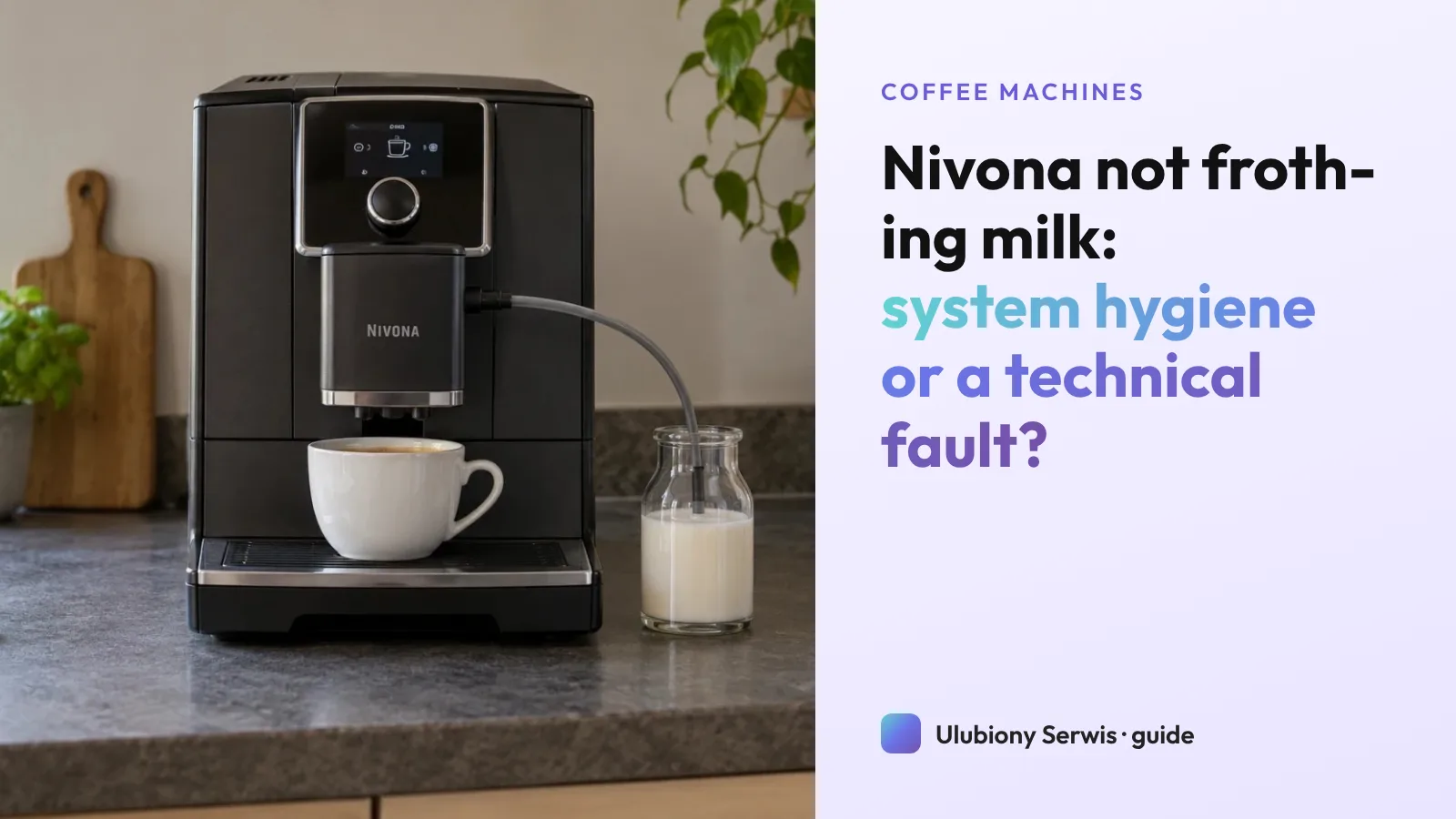
Nivona not frothing milk: system hygiene or a technical fault?
The short answer
IN BRIEF If your Nivona does not froth milk, the first step is to clean the user-serviceable parts properly and check that they are assembled correctly. If the coffee machine still does not draw milk, produces only steam or creates large, unstable bubbles, the cause may be the air supply, airtightness, temperature or controls. Do not unblock the system with wire or pour in random products.
What the user sees
It is worth distinguishing between not drawing milk and poor froth quality. These are two symptoms that may have shared, but not identical, causes.
- milk is not drawn in even though the device is running;
- steam comes out of the nozzle, but no milk;
- the froth is thin, has large bubbles or collapses quickly, and the milk may stay cool;
- the function works only sometimes or after the tube is moved;
- the system makes a louder sucking sound than before.
What you can safely check
- clean the milk system parts exactly as described in the manual for your model;
- check that the tube, nozzles and container are assembled correctly;
- use fresh, cold milk for just one test run;
- note whether the coffee machine draws milk, produces steam and whether the problem affects every drink.
What could be the cause
Once maintenance has been ruled out, the milk, air and steam paths need to be assessed. Without a leak test, it is not worth pointing to a single part.
- deposits in a part that you can dismantle and clean;
- a leaking or worn tube or connector;
- disrupted air intake;
- an incorrect amount or temperature of steam;
- a fault in a valve, sensor or the controls.
When to stop using it
SAFETY Stop testing if steam escapes in an unusual place, the tube or connector is cracked, there is a leak into the inside or you can smell overheating. A hot system can cause burns.
Does a repair make sense?
The milk system is worth repairing when the rest of the coffee machine works reliably and the cause is single and confirmed. If there are also leaks, heating errors and brewing problems, a full assessment of the device is needed.
DECISION RULE We compare the full cost with a device with similar functions. A single confirmed fault and the good condition of the other assemblies speak in favour of a repair; several independent faults require further assessment.
How the repair works
- a test of milk intake and steam with the correct set of accessories;
- a check of airtightness, the air path and temperature;
- repair of the confirmed part once the scope has been approved;
- comparison of froth quality in a repeatable test drink.
What to include in your request
- the full model from the rating plate and, where applicable, the designation of the station, power adapter or accessory;
- a description of when the main symptom occurs: milk is not drawn in even though the device is running;
- a short video of the whole scenario, a photo of the message and of the parts needed to reproduce the fault;
- whether the symptom is constant or intermittent, and what happened immediately before it appeared;
- the history of previous repairs, water damage, power surges, drops or use of an incompatible accessory.
FAQ
Can the type of milk affect froth quality?
Yes, temperature and composition affect the result, but they do not explain a situation where the device does not draw liquid at all or steam escapes in the wrong place.
Can I clean the tube with a needle?
No. A sharp tool can damage the tube or change the diameter of the part. Use only the method described in the manual.
Should I send the milk container to the repair service?
If the fault concerns milk, the full set may be needed to reproduce the symptom. Confirm the list of items before packing.
From repair request to a checked device
Submitting a repair request doesn't commit you to a repair. Based on the model and the description of the symptoms, we prepare an initial assessment and an approximate cost range. Once you accept the quote, we arrange a prepaid, insured pickup of the device to our repair service.
The technician reproduces the symptom and compares the device's behaviour with a correct cycle. We confirm the scope of the repair with a test or measurement. If the scope or cost needs to change, we contact you before going ahead. After the work, we check again the function that was causing the problem and carry out a final inspection.
Timing, costs and warranty
Most repairs take 2–5 business days from when we receive the device; parts availability can extend this. The initial quote and pickup to our repair service after you accept it cost 0 zł. The diagnosis is free if you go ahead with the repair; if you cancel, or in cases of water damage or a power surge, a fee of 150 zł applies.
Return shipping costs 25 zł with insurance up to 1500 zł or 45 zł with cover up to 5000 zł. The warranty covers the service performed and the parts listed in the approved scope: up to 12 months for individual customers and 6 months for batteries and for businesses. Details are set out in the warranty and insurance terms and the safe transport rules.
After the repair we also carry out basic cleaning and a quality check at no extra charge.
You will find the full range of supported models and other faults on the Nivona repair page. When reporting this case, give the model and the symptoms described in this guide.
Next step
Tell us whether your Nivona does not draw milk, produces only steam or makes poor froth. Include the model and a photo of the milk set.