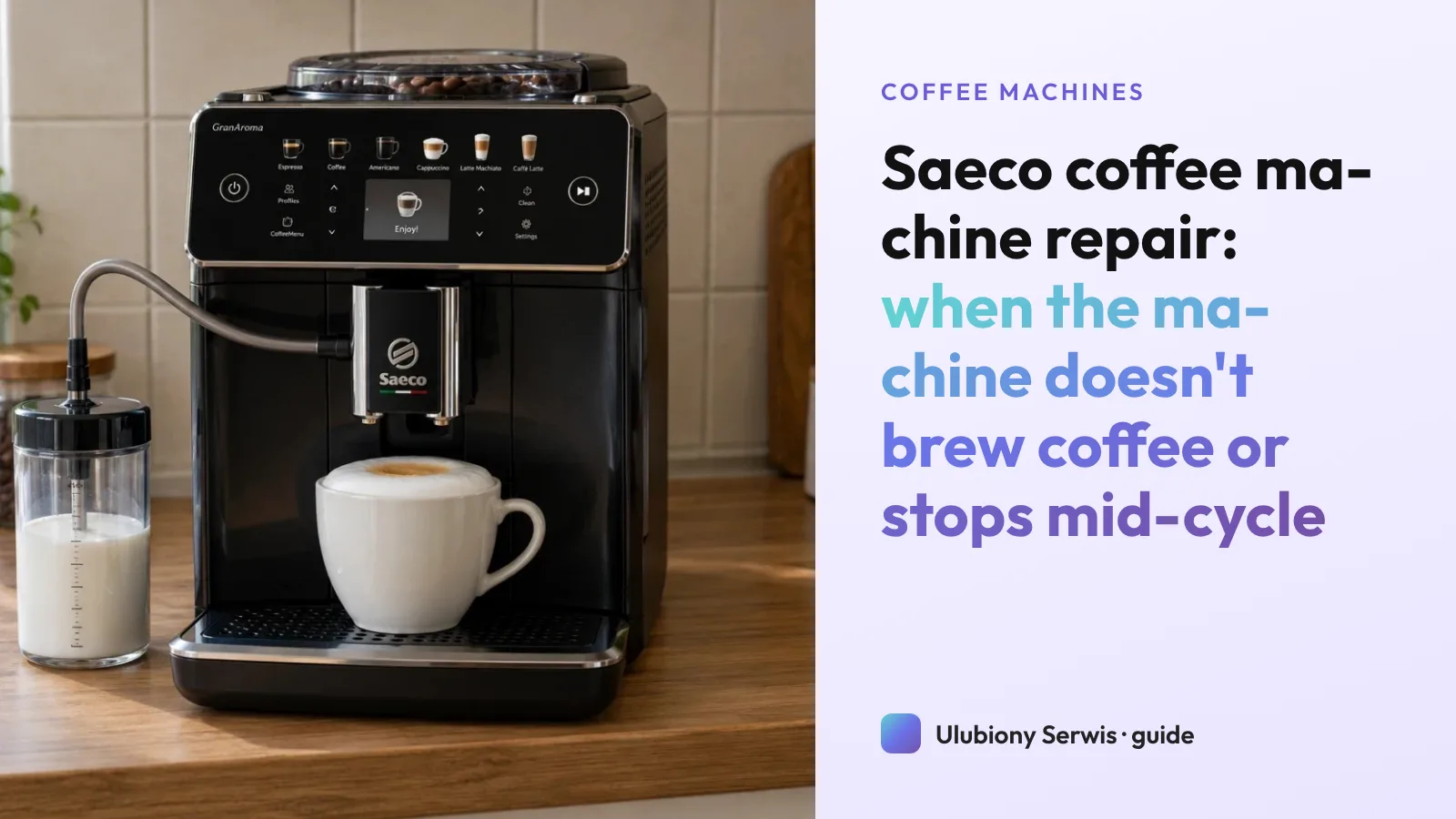
Saeco coffee machine repair: when the machine doesn't brew coffee or stops mid-cycle
The short answer
IN SHORT When a Saeco coffee machine doesn't make coffee, the most important thing is to establish at which stage the cycle ends. The device may not be drawing in water, not grinding, not forming a portion or not moving the brew unit. A safe check covers only user-accessible parts. Trying to force the mechanism by hand or running it with safety devices removed can make the damage worse.
What the user sees
The description “doesn't make coffee” is too broad. For a diagnosis, what matters are the sounds, water in the trays, what the coffee grounds look like and whether the device finishes rinsing.
- the machine grinds the beans, but no coffee comes out;
- the cycle stops before or after rinsing;
- the brew unit doesn't return to its resting position;
- more water than usual appears in the trays;
- the device makes a repetitive drive or pump noise.
What you can safely check
- check the water and bean levels and that the accessible containers are seated correctly;
- if the manual allows it, remove the brew unit and reinsert it correctly without using force;
- note whether the problem affects every drink or only coffee or hot water;
- photograph the coffee grounds and the water in the trays after a single safe attempt.
What could be the cause
The possible cause depends on where the cycle stops. The water system, the brewing mechanics or the controls can all produce a similar effect.
- a blockage or leak in the water circuit;
- worn seals or brew unit components;
- a fault in the drive and positioning of the mechanism;
- a problem with the grinder or coffee dosing;
- an incorrect sensor reading or control fault.
When to stop using it
SAFETY Stop using the machine if the mechanism makes a loud cracking sound, the brew unit is jammed, water flows out under the machine or there is a smell of overheating. Don't move the mechanism with tools and don't bypass the housing sensors.
Does a repair make sense?
A repair is more worthwhile when the device is complete, well looked after and the diagnosis points to a single system. With cracks, extensive corrosion or simultaneous wear of the drive, grinder and hydraulics, a broader assessment of cost-effectiveness is needed.
DECISION RULE We compare the full cost with a device with similar functions. A single confirmed fault and the good condition of the other assemblies speak in favour of a repair; several independent faults require further assessment.
How the repair works
- identifying the model and design version;
- reproducing the cycle and checking where the process stops;
- measurements and a test of the mechanism without swapping parts by trial and error;
- a final check covering rinsing, grinding, brewing and leak-tightness.
What to include in your request
- the full model from the rating plate and, where applicable, the designation of the station, power adapter or accessory;
- a description of when the main symptom occurs: the machine grinds the beans, but no coffee comes out;
- a short video of the whole scenario, a photo of the message and of the parts needed to reproduce the fault;
- whether the symptom is constant or intermittent, and what happened immediately before it appeared;
- the history of previous repairs, water damage, power surges, drops or use of an incompatible accessory.
FAQ
Can I reposition a jammed brew unit myself?
Only as described in the manual for your specific model and without using force. If the mechanism doesn't return to its position, further attempts can damage the drive.
Do wet coffee grounds mean a fault?
Not always. What matters is how they look, the amount of water, the settings and whether the symptom repeats. It's an observation for the diagnosis, not a ready verdict.
Should I send the milk container?
If the fault concerns milk drinks, the accessory may be needed to reproduce the symptom. The set should be confirmed before shipping.
Next step
Describe at which stage your Saeco stops working and attach a short video. This makes it easier to determine which parts of the set are needed for the diagnosis.