How water hardness affects your coffee machine
Coffee machines have become more popular in recent years and are now a fixture in many homes and offices. However, many coffee lovers do not realise what an important role water – or more precisely its hardness – plays in brewing coffee. How water hardness affects a coffee machine is a topic worth exploring if you want to enjoy the perfect taste and a long-lasting appliance. Find out what water hardness is, how it affects a coffee machine and what steps you can take to minimise its negative effects.
What is water hardness? Definition of water hardness
Water hardness is determined by the content of minerals, mainly calcium and magnesium, dissolved in the water. Hard water contains a high concentration of these minerals, while soft water contains a low concentration. Water hardness is usually measured in German degrees (°dH) or in milligrams per litre (mg/l).
Causes of water hardness
The main source of water hardness is natural minerals that dissolve in groundwater as it flows through layers of rock. Regions with a lot of limestone often have harder water because of the larger amount of dissolved calcium.
The effect of water hardness on the taste of coffee
Taste and aroma
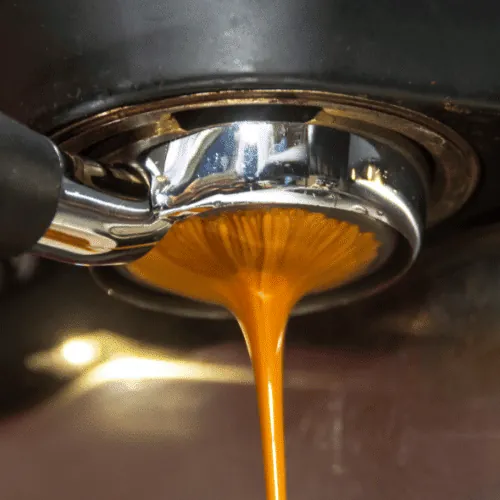
Water hardness can significantly affect the taste and aroma of coffee. Hard water, which contains large amounts of minerals, can overpower the subtle flavour notes of coffee, giving it a more metallic and bitter taste. Soft water, on the other hand, which is low in minerals, can make the coffee taste less distinctive.
Solubility of aromatic compounds
The minerals in water also affect the solubility of the aromatic compounds in coffee. Moderately hard water helps bring out the optimal taste of coffee, while water that is too hard or too soft can disrupt this process.
How water hardness affects your coffee machine
Limescale build-up
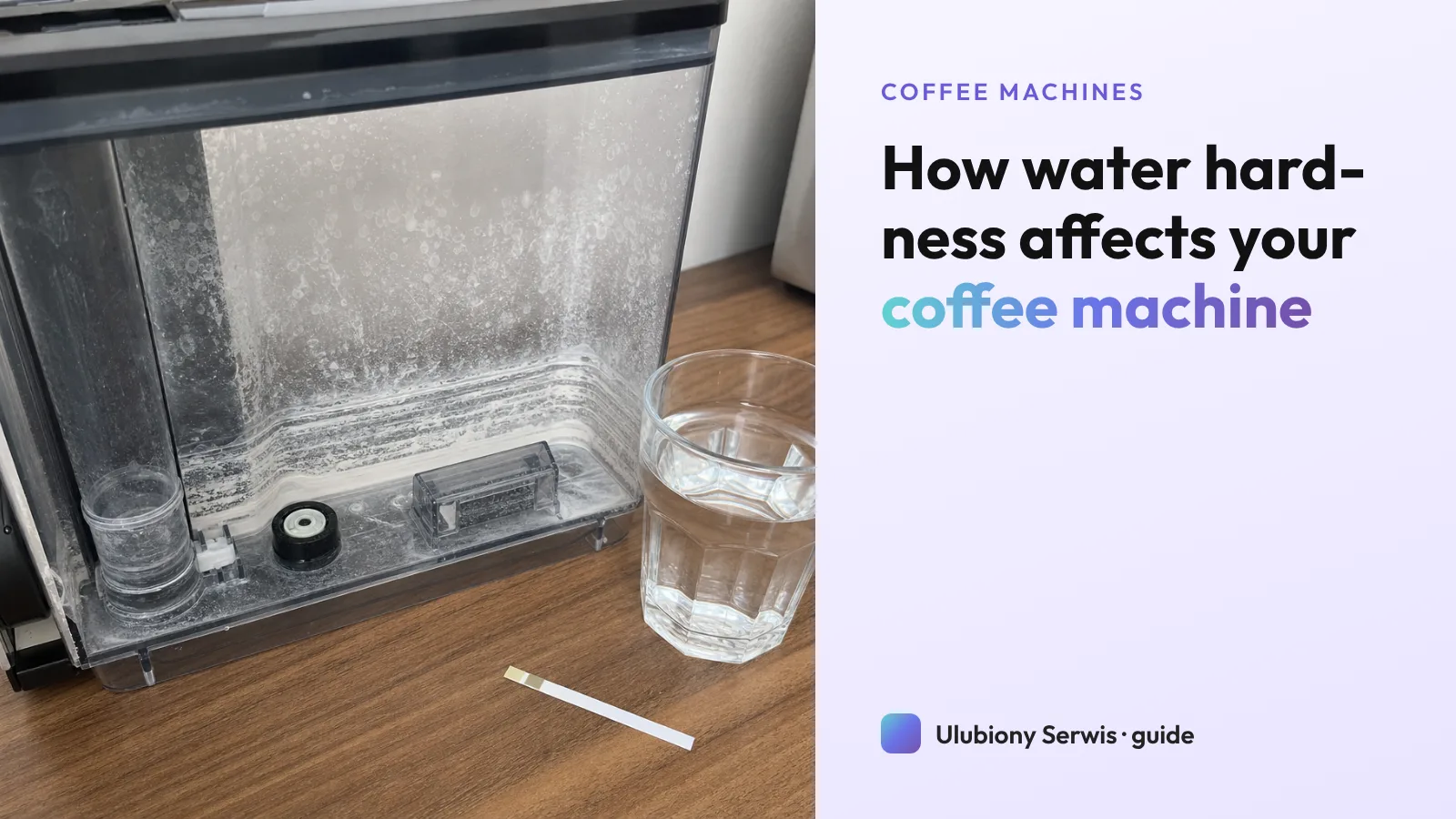
The most obvious effect of using hard water in a coffee machine is limescale build-up. The calcium and magnesium in hard water can be deposited inside the machine, forming a hard layer of limescale that can block pipes and nozzles and cause corrosion of metal parts.
Maintenance and cleaning
Limescale build-up means the machine needs regular maintenance and cleaning. Improper upkeep can lead to breakdowns and a shorter life for the appliance. Regular descaling is essential to prevent deposits from building up and to keep the machine in good technical condition.
Effect on energy efficiency
Limescale deposited on the machine's heating elements can also affect its energy efficiency. The layer of limescale acts as an insulator, which means the machine has to use more energy to heat the water to the right temperature. This not only increases running costs but also has a negative impact on the environment.
How to reduce the negative effect of water hardness on a coffee machine
Using water filters
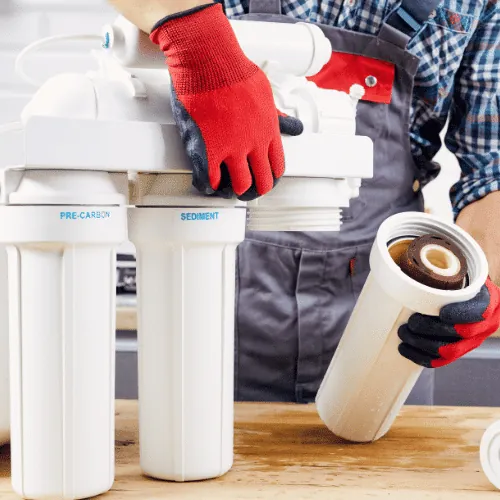
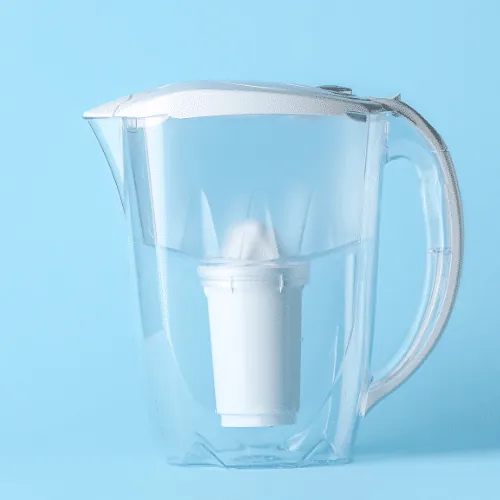
One of the most effective ways to reduce water hardness is to use filters. Carbon filters or ion-exchange resin filters can significantly lower the mineral content of water, thereby improving the taste of coffee and reducing the risk of limescale build-up in the machine.
Regular descaling
Regular descaling is key to a long-lasting machine. It is recommended to use specialist descaling agents in accordance with the manufacturer's instructions. This removes existing deposits and prevents them from building up further.
Using bottled water
If filters cannot be used, bottled water with a low mineral content can be an alternative. However, it is worth checking the label and choosing water with low hardness to avoid problems related to limescale build-up.
Water and the lifespan of a coffee machine
The importance of proper maintenance
Proper maintenance of a coffee machine, including regular cleaning and descaling, is key to its longevity. Well-maintained machines can work smoothly for many years, providing consistent coffee quality.
How water quality affects the life of the machine
The quality of the water used in the machine has a direct effect on its lifespan. Hard water can lead to faster wear of the machine's components, which in turn may require more frequent repairs or even replacement of the appliance. That is why it is so important to use suitable filters and descale regularly.
Hard water vs soft water: a comparison
Pros and cons of hard water
Hard water, although rich in minerals, can have a negative effect on the taste of coffee and on how the machine works. The advantage, however, is that some minerals can contribute to a more balanced taste if their concentration is not too high.
Pros and cons of soft water
Soft water is less likely to cause limescale deposits, which is good for the coffee machine. However, it can make coffee taste less intense, which some coffee lovers may consider a drawback.
How to check water hardness?
Water hardness testers
The easiest way to check water hardness is to use hardness test strips or testers, which you can buy in household goods shops. These testers let you determine the hardness of your water quickly and easily at home.
Laboratory analysis
For more precise results, you can have the water analysed in a laboratory. Such a test will provide detailed information on the mineral content of the water, allowing you to tailor your coffee machine maintenance strategy more accurately.
Practical tips for coffee machine users
Choosing the right water
It is recommended to use water of moderate hardness to ensure the best coffee taste and minimise the risk of limescale build-up. It is also worth checking the water quality regularly and adjusting how you treat it.
Regular maintenance
Do not forget regular maintenance of your machine. Regular cleaning, descaling and replacing water filters are the key tasks that will keep the appliance working effectively for a long time.
The effect of water hardness on different types of coffee machines
Espresso machines
Espresso machines are particularly prone to limescale build-up because of the high temperatures and pressures at which they work. Regular descaling is essential to keep them working properly.
Drip coffee makers
In drip coffee makers, limescale build-up is less of a problem, but it is still worth looking after the water quality. Using filtered water can significantly improve the taste of coffee and extend the life of the appliance.
Capsule machines
Capsule machines are relatively easy to maintain, but hard water can cause problems for them too. Regular cleaning and descaling in line with the manufacturer's recommendations is the key to their longevity.
The effect of water hardness on how a coffee machine works cannot be overstated. Hard water can have a negative effect on the taste of coffee, cause limescale build-up and shorten the life of the appliance. To enjoy the best coffee and a long-lasting machine, it is worth using suitable filters, descaling the appliance regularly and choosing water of moderate hardness. By looking after water quality, you can significantly improve the quality of the coffee you brew and ensure your machine lasts