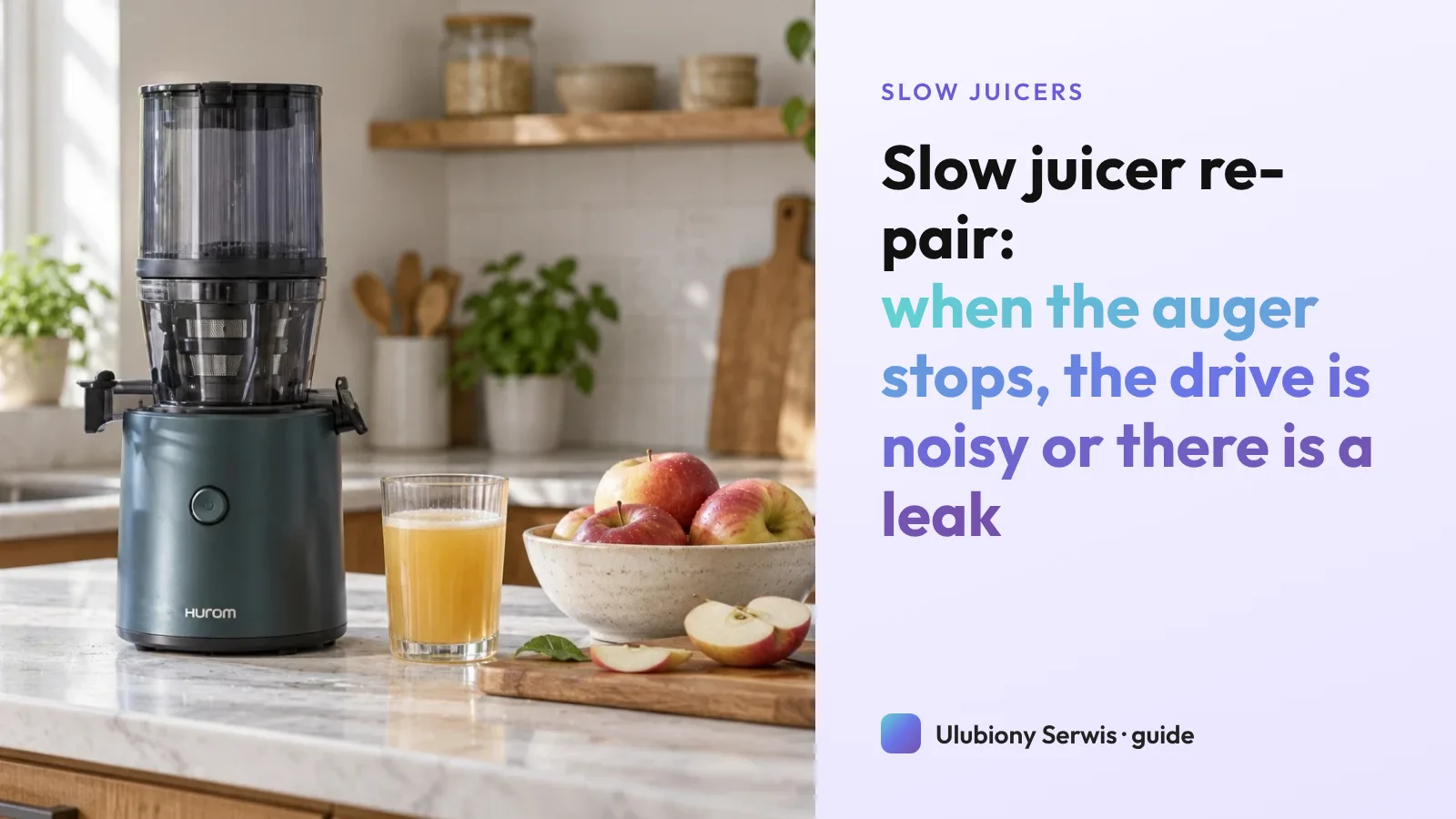
Slow juicer repair: when the auger stops, the drive is noisy or there is a leak
The short answer
IN BRIEF If the auger of your slow juicer stops, first unplug the device and follow the unblocking instructions in the manual. Repeated loss of drive, cracking noises, a smell of overheating or a leak into the base require diagnosis. Do not keep the motor running on a jammed mechanism or try to turn the coupling with tools while the device is plugged in.
What the user sees
Note the produce, the portion size and when it stops. A one-off overload is assessed differently from a problem that occurs even with nothing in it.
- you can hear the motor, but the auger does not turn;
- the drive stops under a light load;
- the device makes cracking or grinding noises;
- juice gets into the base or around the shaft;
- the juicer does not start even though it is assembled correctly.
What you can safely check
- unplug the device before dismantling the working parts;
- check the assembly of the bowl, lid and safety interlocks;
- remove the produce as described in the manual, without using metal tools;
- inspect the auger, strainer, coupling and seals for cracks.
What could be the cause
An overload is an event, not always the cause. A repair service should establish whether the mechanism was jammed by produce, a damaged part or a faulty drive.
- incorrect assembly or an active safety interlock;
- jammed produce or a cracked working part;
- a worn coupling or gearbox;
- a leaking shaft seal;
- a fault in the motor, capacitor, switch or electronics.
When to stop using it
SAFETY Unplug the device if there is a leak into the base, a burning smell, sparking, loud grinding or a cracked working part. Do not put your hand or tools into the chamber while it is plugged in.
Does a repair make sense?
A more expensive, complete juicer with a single drive or seal fault can be a good candidate for repair. Several cracked working parts and unavailable parts may change the balance.
DECISION RULE We compare the full cost with a device with similar functions. A single confirmed fault and the good condition of the other assemblies speak in favour of a repair; several independent faults require further assessment.
How the repair works
- a check of completeness, interlocks and working parts;
- a drive test with no load and under a controlled load;
- a leak check of the shaft and base;
- a final test with a repeatable batch of produce after the repair.
What to include in your request
- the full model from the rating plate and, where applicable, the designation of the station, power adapter or accessory;
- a description of when the main symptom occurs: you can hear the motor, but the auger does not turn;
- a short video of the whole scenario, a photo of the message and of the parts needed to reproduce the fault;
- whether the symptom is constant or intermittent, and what happened immediately before it appeared;
- the history of previous repairs, water damage, power surges, drops or use of an incompatible accessory.
FAQ
Will the reverse function free a jammed auger?
It may help only in situations covered by the manual. If the mechanism cracks, does not turn or jams with nothing in it, further attempts may make the damage worse.
Can a cracked strainer be glued?
The part works under load and comes into contact with food. A makeshift repair may not last and may be dangerous; a part compatible with the model is needed.
Should I send all the parts to the repair service?
A load test often requires the complete set of working parts. The repair service should give you an exact list before you pack.
Next step
Give us the model, describe when it stops and attach photos of the auger, strainer and coupling. We will confirm what you need to send.